Grudziądz, situated on the banks of the Vistula River, stands as a testament to over a millennium of history. Its origins date back to a Slavic timber and earth hillfort, first documented in 1065 under the name Castrum Grudomzch. This early settlement controlled a crucial crossing on the Vistula, serving the Piast monarchy as a northern frontier outpost.
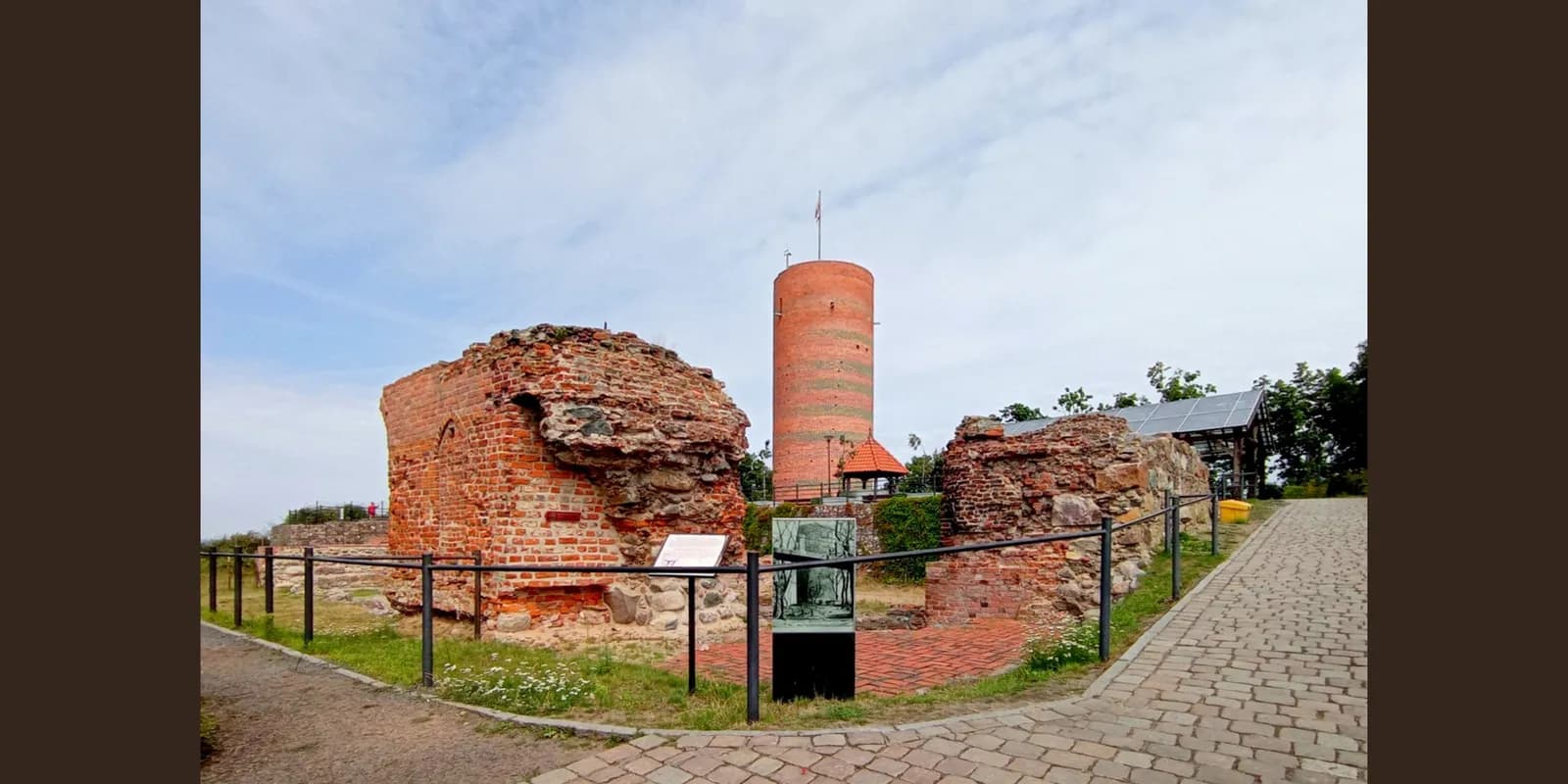
In the early 13th century, the region witnessed significant change when Prince Konrad of Masovia granted Chełmno Land, including Grudziądz, to Bishop Christian of Oliwa. Shortly after, in 1231, the Teutonic Knights took control, marking a transformative period for the city. Beginning around 1235, the Order constructed a formidable brick castle, completing it by 1299. Recognition of the town’s growing importance came with the granting of municipal rights in 1291 under Culm law, a move that encouraged trade and urban development.
Though Grudziądz was not a core member of the Hanseatic League, its position on the Vistula enabled it to engage indirectly with the expansive Baltic trade network. The city played an essential role in the grain export trade, linking inland Poland to coastal markets and towns across the Baltic Sea.
The political landscape shifted again in 1454 when Grudziądz joined the rebellion against Teutonic rule, later becoming part of the Kingdom of Poland under the 1466 Second Peace of Thorn. The castle was repurposed as the seat of Polish starosts, embedding it further into the region’s administrative framework.
Following the First Partition of Poland in 1772, Grudziądz entered Prussian hands and was developed into a key fortress. After World War I, it returned to Polish sovereignty, reaffirming its national significance.
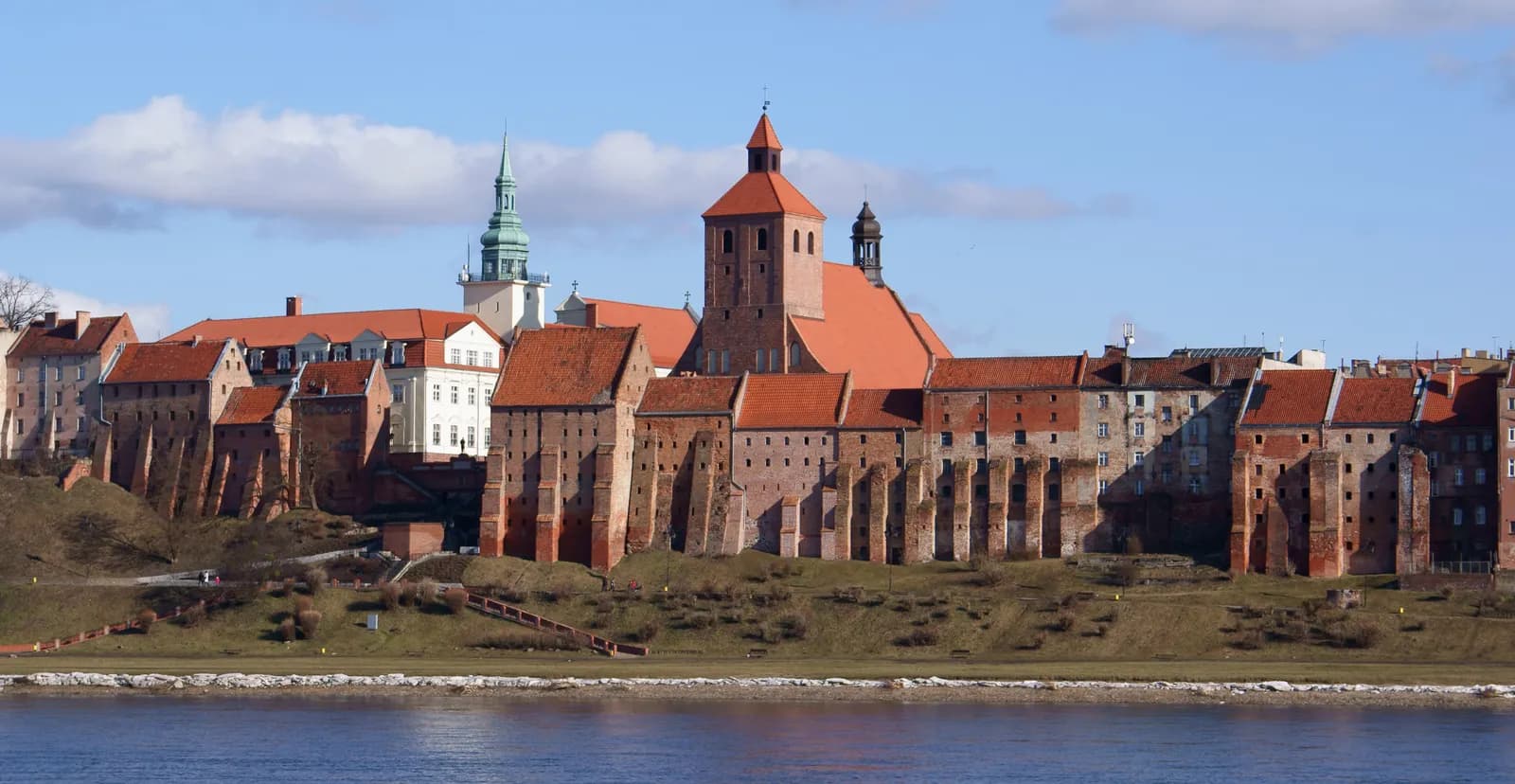
The city’s most striking feature remains its granaries that stand along the steep escarpment overlooking the Vistula. From the 14th century, Grudziądz was fortified with brick walls, but by the 15th century, the outer defensive wall was replaced with a series of multi-storey, fortified granaries. These buildings served both a strategic and economic function, storing grain destined for export and reflecting the city’s role as an inland port.
Today, these granaries are celebrated as Gothic and Baroque architectural landmarks. Recognised as Historic Monuments of Poland, they form an essential part of the European Route of Brick Gothic. They continue to symbolise Grudziądz’s enduring link to its medieval past and the broader trading history of the Vistula corridor.
Grudziądz’s history is deeply intertwined with its geographical significance and the various powers that shaped it over the centuries. From its Slavic roots to its time under the Teutonic Knights, its brief Hanseatic connections, and its fortified granaries, the city remains a unique chapter in the story of Poland’s riverine and trading heritage.